
Sri Maha Rajyam Temple · Sri Rama Alayam
🏹 Sri Ramar
The Seventh Avatar of Lord Vishnu — Maryada Purushottam — The Perfect Being
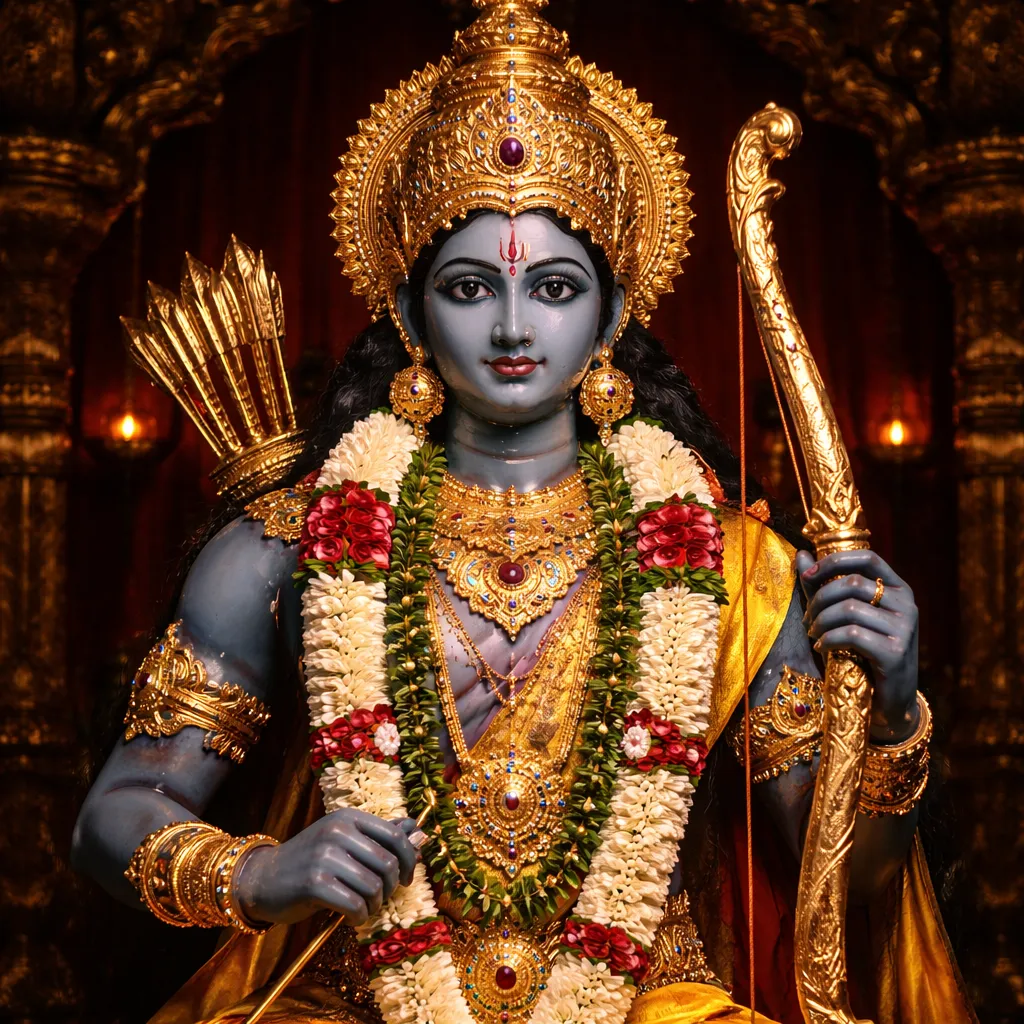
🙏 Tamil: ராமர் (Rāmar)
✨ Avatar: 7th of Vishnu’s 10
🎨 Colour: Blue (sky & ocean)
🏹 Symbol: Bow & Arrow (Kodanda)
💑 Consort: Sita Devi
🎊 Festival: Rama Navami
📖 Epic: Valmiki Ramayana
The Divine King Who Chose Duty Over Desire
Sri Ramar is the co-presiding deity of Maha Rajyam Temple’s Sri Rama Alayam. He is the seventh avatar of Lord Vishnu, who descended to earth in human form to establish righteousness, destroy evil, and demonstrate to all humanity how a perfect human life should be lived.
Rama is simultaneously the ideal son who accepts exile without complaint; the ideal husband who crosses oceans to rescue Sita; the ideal brother whose devotion to Lakshmana is a model of fraternal love; and the ideal king whose reign — Ramarajyam — represents the golden age of perfect justice and prosperity.
The Divine Birth — Why Vishnu Came to Earth
In the Treta Yuga, the demon king Ravana had become so powerful through his austerities that he terrorised all three worlds. He received a boon of near-immortality protecting him from gods and demons — but in his arrogance, he had not included humans. This became the opening through which divine justice would operate. Lord Vishnu chose to take birth as a human being — not merely to destroy Ravana, but to demonstrate the path of righteousness for all humanity.
King Dasharatha of Ayodhya performed the sacred Putrakameshti yajna to obtain sons. A divine being emerged from the fire carrying consecrated rice pudding. Queen Kaushalya received the largest portion and gave birth to Rama — on the ninth day of Chaitra month, celebrated annually as Rama Navami.
The Great Exile — Dharma Above Personal Happiness
When King Dasharatha was about to crown Rama as king, Queen Kaikeyi invoked two old boons — demanding Bharata be crowned and Rama exiled for fourteen years. Without a single word of complaint or anger, Rama accepted with perfect serenity: “A king must keep his promise. I will go to the forest.”
Sita refused to stay behind: “Where you are is my kingdom. The forest with you is a palace; the palace without you is a forest.” Lakshmana also joined them, leaving his own comfort behind. This moment — Rama choosing duty and truth over personal happiness and kingship — is the central teaching of the Ramayana.
The Battle of Lanka — Good Triumphs Over Evil
When Ravana abducted Sita, Rama — with the help of Lord Hanuman and the vanarasena — built the great Rama Setu bridge across the ocean to Lanka. The battle lasted many days. Ravana represented the ultimate ego — the being who knows the divine yet chooses desire over dharma. In defeating Ravana, Rama demonstrated that no matter how powerful evil becomes, righteousness ultimately prevails.
Deepavali — The Return of the Divine King
After the victory and fourteen years of exile, Rama returned to Ayodhya. The citizens lit oil lamps in every home to guide their beloved king home through the darkness — celebrated annually as Deepavali, the Festival of Lights. Rama’s reign became the legendary Ramarajyam — a golden age of perfect justice, prosperity and happiness.
Rama’s Nine Divine Qualities
The Valmiki Ramayana lists nine divine qualities that make Rama the perfect human being: virtue, courage, knowledge of righteousness, gratitude, truthfulness, firmness in vows, purity of character, concern for all beings, and learning in both worldly and spiritual knowledge. These nine qualities are the model for all Tamil Hindu devotees.
🏹 Sri Ram — Jai Ram — Jai Jai Ram 🏹
The Name of Rama — the most powerful of all mantras